العودة — لماذا العلاقة بين الصين والعرب ليست جديدة
|
When people talk about China and the Arab world today — the trade deals, the infrastructure, the investment — they almost always frame it as something emerging. A new chapter. A new relationship between two civilisations that are only now finding each other.
|
|
|
I want to push back on that framing.
|
|
|
This is not a new relationship.
It is an old one resuming.
|
|
|
The original contact |
|
|
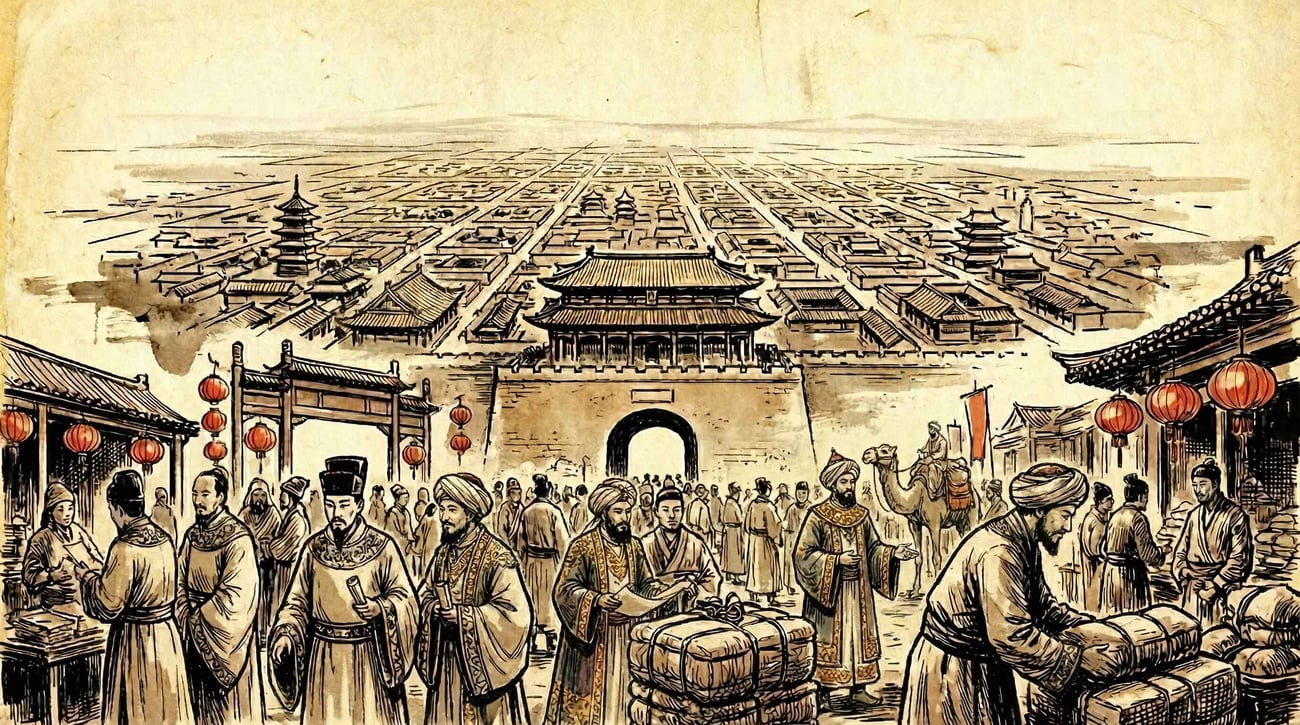 |
长安, 618 CE — a city of one million, where Arab merchants had their own quarter and nobody found it remarkable.
|
The Tang Dynasty — which began in 618 CE — was arguably the most cosmopolitan empire that had ever existed on Earth. Its capital city, 长安 (Chang'an), had over a million people at a time when London had barely twenty thousand. And inside that city — Arab merchants. Persian traders. A Muslim quarter. Mosques.
|
|
|
At the same time, the Abbasid Caliphate was building Baghdad into the greatest centre of science, medicine, philosophy, and trade the world had seen. Arab geographers were mapping Chinese cities by name. Chinese goods were moving west. Arab knowledge was moving east.
|
|
|
The Islamic Golden Age and the Tang Dynasty were not parallel stories. They were the same story, told in two languages.
|
|
|
Zheng He and what his voyages actually meant |
|
|
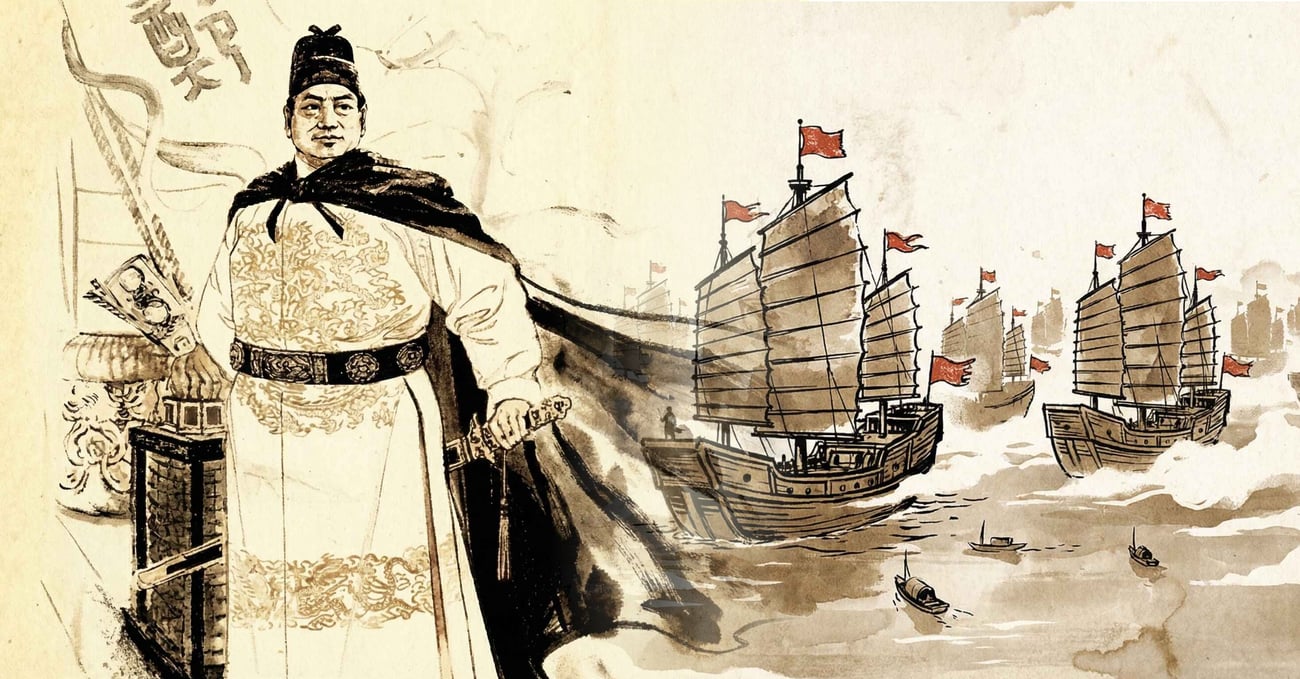 |
317 ships. 28,000 men. Zheng He reached Arabia in 1433. Vasco da Gama was not born until 1460.
|
|
|
Between 1405 and 1433, the Chinese admiral 郑和 — Zheng He — made seven voyages commanding a fleet of 317 ships and nearly 28,000 men. His flagship was, by some estimates, nearly five times the length of Columbus's entire fleet. He reached the Arabian Peninsula. His sailors received gifts of frankincense and exotic animals on the shores of Arabia.
|
|
|
Zheng He reached Arabia in 1433. Vasco da Gama was not born until 1460.
|
|
|
His voyages were not a beginning..
They were a peak.
|
|
|
|
By the time Zheng He reached Arabia, China and Arabia had already been in contact for 800 years. He was not opening a trade route. He was sailing along one that had existed since the Tang Dynasty. And then — in 1433 — the voyages stopped. They burned the ships. They destroyed the records. China turned inward.
|
|
|
The interruption |
|
|
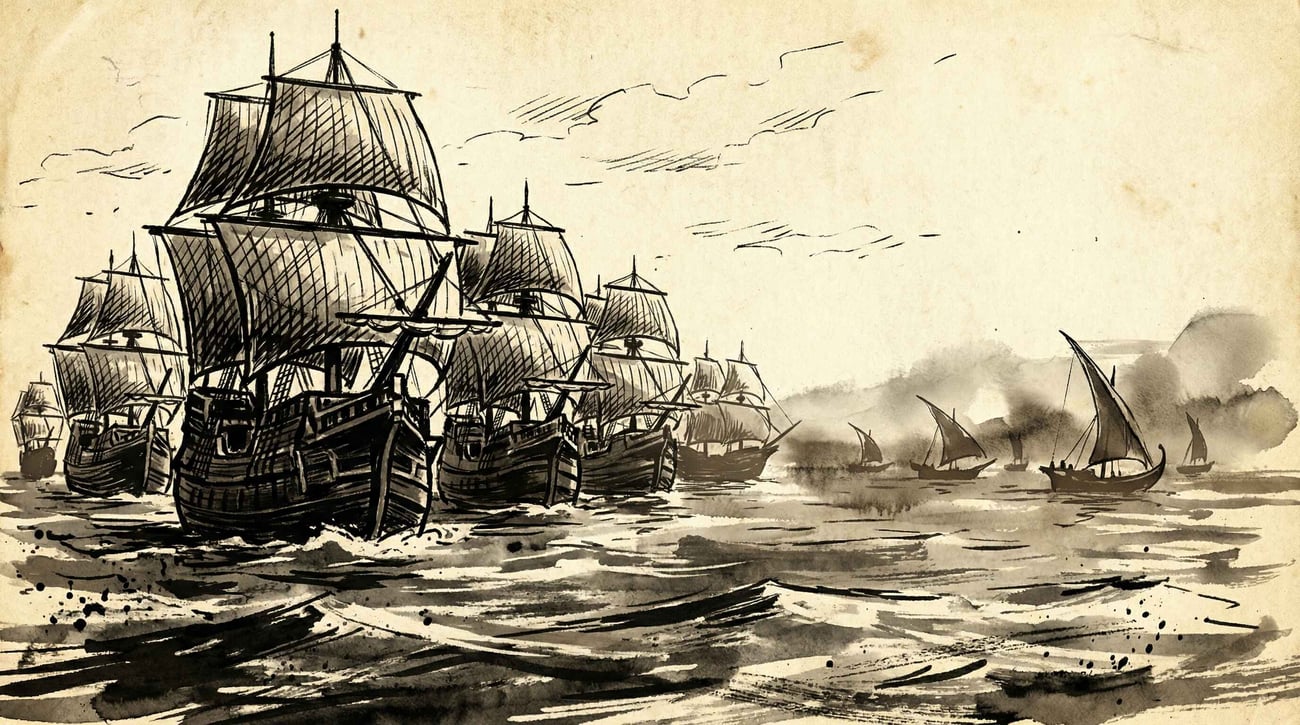 |
The sea routes that China and Arabia had shared for 800 years — taken in a generation.
|
|
|
Within decades, Portuguese ships appeared in the Indian Ocean. Then the Dutch. Then the British. Over the next three centuries, European powers took control of the sea routes that had connected China and Arabia for a millennium.
|
|
|
China entered what the Chinese call 百年屈辱 — the Century of Humiliation. The Arab world watched outside powers redraw its borders and extract its resources.
|
|
|
Two civilisations. The same story. Different languages. Both interrupted. Both waiting, without fully knowing it, to resume.
|
|
|
The homecoming |
|
|
What is happening now is not a new relationship being built. It is 归 — a return. China is the Gulf's largest trading partner. Thousands of students across the Arab world are beginning to learn Mandarin.
|
|
|
And when a Chinese businessperson sits across from a Gulf businessperson today and feels something familiar — that shared instinct around hospitality, relationship, and the long view — they are not imagining it.
|
|
|
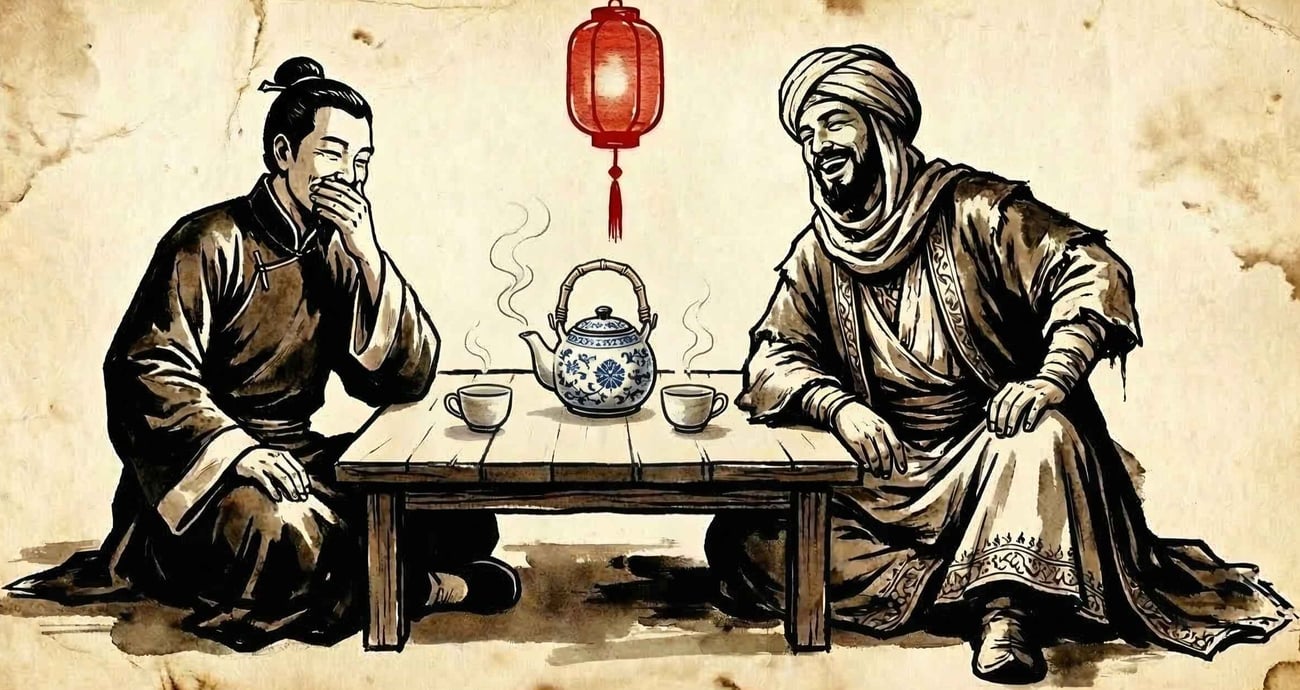
This is not two strangers meeting.
This is two old friends finally sitting back down
at the same table.
|
|
|
Zheng He stood on the shores of Arabia almost 600 years ago. He was not the first. He was simply the most visible. Your job, if you work between these two worlds, is to remember that history for the people sitting across from you.
|
|
|
 |
|
|
|
|
|
|